Saturday, 8 October 2011

YEAR 13 LESSON FIVE [7th Oct 11]: Homework.


Students were introduced to Reception Theory and the philosophy of Jean Baudrillard with specific reference to his view that the media has created a HYPERREALITY.

Students were introduced to the idea of Moral Panics and media regulation.Below is a link to the Mark Kermode clip that I presented to the class. Kermode is a wonderfully engaging film critic and I would advise all students to visit his blog:
http://www.bbc.co.uk/blogs/markkermode/2009/06/moralpanic_150609.html
The class discussed the definition of Moral Panic and the discussion moved into a consideration or regulation and why media needs regulating. This discussion involved the class being shown the following clip from the film 'The Life of Brian' and a consideration of why this film was banned by some UK local councils when it was released in 1979. Ireland and Norway refused permission to broadcast this film. WHY?:
http://www.youtube.com/watch?v=1loyjm4SOa0
The class were shown two adverts that have been banned by the ASA.Click on link to access the OPIUM and DFS adverts:
http://www.youtube.com/watch?v=uvBVUit3kjY
http://www.youtube.com/watch?v=at1y7iHmjXQ
Here are some articles that explain why these advertisements were banned:
http://www.bbc.co.uk/news/uk-12336061
http://news.bbc.co.uk/1/hi/business/7762337.stm

Reference was made to Jo Swinson, the Liberal Democrat MP, and her opinions relating to digital image manipulation. She has challenged the morality of digital image manipulation and is a very interesting media voice. Click on link below to develop an understanding of Swinson's views:http://www.youtube.com/watch?v=eKMy-9w17a8
This is a speech she gave to Parliament titled: The effect of media images on the body of women and girls. ALL STUDENTS SHOULD LISTEN TO THIS SPEECH.

Below is an example of image manipulation that was banned by the ASA. This OLAY advert was considered to be 'too airbrushed.':
http://www.bbc.co.uk/newsbeat/14308714

The class discussion considered why these advertisements could be considered controversial and were introduced to the Women's Aid advertisement CUT that was released in 2009. The CLEARCAST regulatory organisation considered this film unsuitable for television unless the final scenes received a massive re-edit. Women's Aid refused to re-edit their film and decided to broadcast the film online and in cinemas accompanied by a print campaign. There was a 50% rise in contributions to the charity after this film and print campaign. Was the CLEARCAST decision the correct decision? Students were asked to consider the following questions:
  • Who has the power to regulate media?
  • Why do we need protection from media?
  • Who are the institutions with the power to regulate media?
  • How does regulation relate to media theory?
Below is the link to the Women's Aid CUT film:
http://www.youtube.com/watch?v=j4RjsqPYaS0

Students were offered the first five minutes of Stan Kubrick's 'A Clockwork Orange' and asked to consider why Kubrick made the decision to censor his own film.

Finally the class were shown the BBC advertisement for Sherlock Holmes and asked to provide a media analysis to this text appropriate for MEST3 Section A.

HOMEWORK: Students should produce an A4 revision sheet for their fellow media comrades. All students were provided with a research topic and I expect to receive this A4 sheet next week. The three students who missed this session need to see me to receive their topic task. Topics offered to the students included:
  • OFCOM
  • THE HAYS CODE
  • THE ADVERTISING STANDARDS AUTHORITY
  • THE BRITISH BOARD OF FILM CLASSIFICATION
  • ISSUES RELATING TO MANHUNT 2
  • MEDIA ISSUES LINKED TO JO SWINSON AND HER CAMPAIGN AGAINST IMAGE MANIPULATION
  • THE DIGITAL ECONOMY ACT
  • MEDIA ISSUES LINKED TO THE JUDAS PRIEST TRIAL IN 1990.
  • MEDIA ISSUES LINKED TO THE FILM 'A CLOCKWORK ORANGE'
The aim of this research task is to make students aware of who regulates our media and make students aware of their regulatory power. All students need to illustrate their work with specific examples of regulation or accusations against the influence of a film/game. ALL this information will inform student understanding of the first section of MEST3 and student coursework.

Students also need to familiarise themselves with the following texts as students will be providing an MEST 3 Section A response to these texts in next week's session:
Dexter introduction:http://www.youtube.com/watch?v=fhKRhk49iqQ
Sherlock Holmes advertisement:http://www.youtube.com/watch?v=cSQq_bC5kIw

The questions you will be asked to consider next week are:
  1. How are media forms used to represent the central character?
  2. Why do we watch media that deals with such disturbing material?
The second question will ask you to consider media theory so students need to digest DYER'S theories that I gave you in today's session and you also need to revisit THE USES AND GRATIFICATION THEORY. The second question will test your understanding of media theory and you will be expected to refer to other media texts.

Phew. Lots to do.

Wednesday, 5 October 2011

YEAR 12 LESSON FOUR [4th Oct 11]: Homework.


Students were offered the chance to film footage that will be used to construct a film advertising the sixth form that is aimed at engaging a Year 11 audience. The editing of this material will take place next week.


I perused the footage and a lot of the material is weak but we should be able to construct a two minute film next week. The whole point of this task was to get you to use the equipment and develop an understanding of how difficult it is to capture decent visual material. We will feedback next week, discuss the process of filming, share experiences, watch some of the footage and discuss how we can improve filming technique.

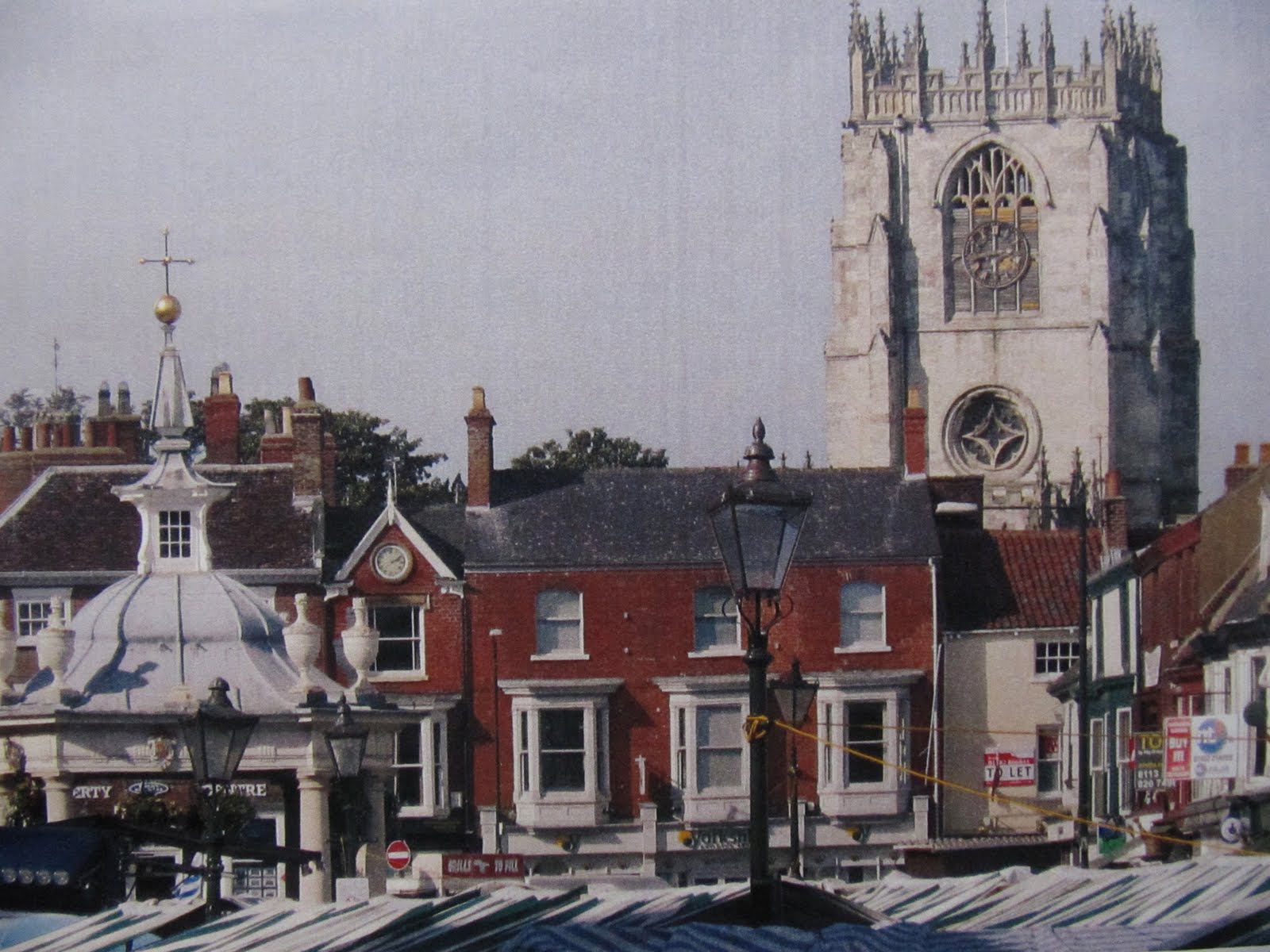
The photographs above were taken by students as part of last week's homework. The task was to capture an image that represents the town of Beverley.

Tuesday, 4 October 2011

REPRESENTATIONS OF THE CITY.


These two texts are representations of the city experience. We will be examining these texts at AS and A2 in the near future. Both are excellent examples of how media forms can be used to create interesting work. The film is technically superb and Maciej Dakowicz is clearly a fine photographer.

Click on link below to access Dakowicz's 'Cardiff After Dark':
http://cargocollective.com/maciejdakowicz#1423665/Cardiff-After-Dark

Click on link below to access Alex Lee's 'Tokyo Slo-Mode':
http://vimeo.com/29186408

Students should be thinking about coursework and these two texts should provide some artistic inspiration.

Friday, 30 September 2011

YEAR 13 LESSON FOUR [30th Sept 11]: Homework.


Students considered the question: 'MEDIA INSTITUTIONS ARE RIGHT TO FEEL THREATENED BY NEW/DIGITAL MEDIA.' CONSIDER THIS STATEMENT AND SHOW HOW MEDIA INSTITUTIONS ARE REACTING TO TECHNOLOGICAL DEVELOPMENTS.

A series of newspaper articles were handed to the class to help them with wider reading.Students are expected to read these resources and use any relevant information to inform their response to the MEST3 question. A series of notes were gathered that will allow students to provide an A2 response to the question. I will provide a very tight essay structure in the very near future [probably Sunday] so keep your media eye on the blog. The essay will expect students to consider:
  • The BBC and how they appear to have embraced digital media to improve the public service that they provide
  • How News reporting has reacted to digital media. Particular reference should be made to Murdoch and the concept of the Paywall.
  • How the music industry has reacted to digital media. Refer to Shawn Fanning and Napster.
  • How the publishing industry has been changed by e-books and the I-Pad and Kindle.
  • How new media such as Wikipedia and MySpace prove that even new digital media institutions need to be aware of technological developments. It is not just pre-digital institutions that should feel threatened by new digital media.
The second half of the session took the students back to media forms and reintroduced students to the terminology of media criticism. Despite the mad fly that buzzed around all session and AD having to have a spider removed from her hair, this was a decent session. Class contribution was good. Keep it up.

HOMEWORK: Complete the essay. Furthermore, students might want to peruse the opening sequence to DEXTER as we will be producing a written response to this text next week. The question will be: HOW ARE MEDIA FORMS USED TO REPRESENT THE NATURE OF THE CENTRAL CHARACTER?
Click on link to access DEXTER intro:
We will be comparing the introduction to DEXTER with this BBC advertisement for SHERLOCK HOLMES. Click on link to access resource.
The link below is to a Channel Four news report concerning digital media and the publishing industry:
Click on link below to hear Luke Harding discuss his experiences as a journalist in Moscow. I gave you one of his articles in this morning's session. Consider Harding's experiences when you read The Guardian article that highlights the aims of the Russia Today news service. Some governments take representation very seriously:
I wanted to show this resource in our morning session but the computer was sulking. Click on link to hear the great Don McCullin discuss his work. McCullin was refused access to cover the Falkland's War in 1982. The British military did not want the world to see McCullin's representation of conflict. Click on link to access a fishymedia McCullin resource:

Here is the Russian TV fight. The comrade with the bad jeans owns The Independent newspaper in the UK:

Lots to do folks. Here is a link to my essay structure:

I look forward to marking the essays handed to me this morning. Toodle pip.

Thursday, 29 September 2011

BANNED MOVIES: BBC article.


In the very near future, A2 students will be investigating media regulation and discovering who regulates our media and why regulation is considered necessary. Here is an article relating to film censorship. Note reader comments.

Wednesday, 28 September 2011

FACEBOOK COOKIE GLITCH: BBC article.


We were discussing cookies in the last A2 lesson. This article may help you with the essay that I am expecting on Friday. Should we be suspicious of the cookie?

http://www.bbc.co.uk/news/technology-15091674

The two cookie related articles at the bottom of this BBC article are also worth a read:

http://www.bbc.co.uk/news/technology-13541250

Students might also want to research KHAN ACADEMY which is a free educational site that could be used in your essay when you are discussing the Internet's ability to provide 'free' information. Khan Academy could be used as an example of 'LEVELLING'. Kahn's Academy could be used as an example of how digital media can empower the individual and enhance democratic freedom. Click on link below:


Tuesday, 27 September 2011

YEAR 12 LESSON THREE [27th Sept 11]: Homework.


The class were introduced to an example of print media used in a Barnardos campaign and were asked to compare this representation with the e-media currently offered by Barnardos. Students were encouraged to compare and contrast the print platform with the e-media platform. The aim of this task was to make students aware of how content is shaped by purpose. The shocking nature of the print/broadcast media is used to encourage the audience to engage with the more informative and less graphically challenging website.
Click on link to access the e-media offered by Barnardos:

Students were introduced to the work of Don McCullin, Pablo Picasso's Guernica and a photograph taken by Javad Moghimi in Tehran in 2009. All the images perused inspired a degree of Institutional/Government repression.McCullin was refused access to The Falklands to cover the War in 1982, Guernica was only exhibited in Spain after Franco's death, and Moghimi had to leave Iran in fear of his life after his photograph irritated the oppressive ruling authority. Students were encouraged to develop their awareness of the power of representation and how some institutions will attempt to control representation by stifling representations that fail to conform to their preferred institutional ideology. Click on links below for resources that relate to McCullin and Moghimi. Students should read/listen/watch these reources to gain a wider understanding of the power of representation and the potential power of a single still image.

http://fishymediaresources.blogspot.com/2010/07/photography-of-don-mccullin-appropriate.html


The final section of the first session involved analysis of two outrageous advertisements from America in the 1970s that link cigarette smoking to a healthy lifestyle....and facial hair!

The final session involved students watching and commenting upon work produced by previous Year 12 classes. Click on links to access all three texts:
For Year 6 audience: http://vimeo.com/15061002
For Year 11 audience: http://vimeo.com/16121970
For Year 11 audience. Doc in a day challenge: http://vimeo.com/13263046

The group decided that next week they would attempt to capture material aimed at accessing a Year 11 audience that contains: brief interviews, interviews with Year 13, uses natural light and captures the bustle and beauty of the school. Students need to organise themselves into groups of two or three as we have six/seven video cameras and four tripods.

HOMEWORK: Students must produce a written response to the three questions offered in today's lesson:
1.How does the e-media for Barnardos differ from the print media? Why? Students must continue to use the language of media in their analysis. Consider how Barnardos represents itself through the e-media.
2.What do we learn about representation and institutional ideology through the photographs of McCullin and Moghami? Read the material posted to fishymedia. It will allow you to produce a sophisticated and detailed response.
3. How are cigarettes represented in the two advertisements? Students should be aware that this question will require you to identify the nature of the connotation that is being associated with the act of smoking cigarettes.

All of these question demands a detailed paragraph that offers specific textual reference and clear and relevant use of media language.

The fourth section of the homework involves students taking a photograph that represents the town of Beverley. Students will be expected to visit the technicians and ask them to print an A4 size copy of the captured image. Your photograph needs to be a jpeg saved to a memory stick so that the lovely lads that are our technicians can easily obtain your photograph and quickly hand you an A4 version of your image. Students need to consider what kind of institution would be a suitable institution for your representation. TRY AND AVOID CLICHE!

Students also need to consider ideas for the first creative filming task next week.

Lots to do folks.